

State of the CDC Workforce Study

This research study focuses on changes that occurred at the Centers for Disease Control and Prevention/Agency for Toxic Substances and Disease Registry (CDC/ATSDR, or “CDC” for short) starting in January 2025.
Our research will focus on changes to CDC operations, policies, and personnel, and how these changes affected the health and well-being of the people who work at CDC.
This study is being conducted by researchers at Michigan State University, some of whom are former CDC employees. You can learn more about the study team at the bottom of this webpage.
LEARN MORE
→ WHAT IS THE STUDY LIKE?
The study is an anonymous internet survey. The first survey will be sent in February 2026 and follow-up surveys will be sent periodically after that.
→ WHAT KINDS OF QUESTIONS ARE IN THE SURVEY?
We will ask you about:
- The kind of work you do or did at CDC
- Why you left CDC or why you’ve stayed
- Work-related stress, mental health, and burnout
- Specific events such as RIFs and the shooting on the Roybal Campus
- Changes at CDC that affected how you and others at CDC do your jobs
→ WILL MY ANSWERS BE ANONYMOUS?
Yes, we’ll do everything we can to keep your answers anonymous. Here are some things we’re doing to make sure no one knows the identity of people participating in the study:
- Not collecting names, addresses, or any other information that could directly identify you
- Not collecting your IP address
You can also help keep yourself anonymous by:
- Only using personal devices (not government-owned equipment) to do the survey
- Not including any personal information in open-ended questions
Please don’t feel bad about skipping any questions in the survey. Skip any questions that make you uncomfortable or if you’re worried that your answer might be unique enough to identify you.
→ AM I ELIGIBLE TO PARTICIPATE IN THE STUDY?
You are eligible to participate if you:
- Are at least 18 years old
- Were working for CDC on January 20, 2025 (Inauguration Day) as an employee, fellow, contractor, student, IPA, or guest researcher
→ I’M A CURRENT CDC EMPLOYEE OR PHS OFFICER. CAN I PARTICIPATE?
Yes, you can participate. We ask that you:
- Use personal devices (not government-owned equipment) to complete the survey
- Complete the survey when you’re off work, such as outside your tour of duty or on your lunch break
→ HOW CAN I ENROLL IN THE STUDY?
Data collection for the first phase of the study is complete and the study is closed to enrollment. We may reopen the study at a later date to collect new data from CDC workers.
→ WAS THIS STUDY REVIEWED BY AN IRB?
Yes. This study was reviewed by the Michigan State University Institutional Review Board (Study #202600010).
→ HOW CAN I GIVE FEEDBACK ON THE STUDY?
There are 3 ways for you to give feedback.
- When you complete the survey, the last question is a place for you to give us anonymous feedback
- Use this anonymous feedback form
- Contact the study team (see below)
→ HOW CAN I CONTACT THE STUDY TEAM?
You can contact the study Principal Investigator, Dr. Candice Johnson, by email at candice@msu.edu.
Please note that Michigan State University is a public university and therefore correspondence sent to msu.edu accounts may meet the definition of a public record.
If you wish to contact us while remaining anonymous, we suggest that you use an email address that does not reveal your identity or that you ask someone to contact us on your behalf. Some of our study team members are former CDC employees; you can use LinkedIn to see if we have mutual connections who might be able to contact us for you.
MEET THE TEAM

Candice Johnson, PhD
Dr. Johnson is an epidemiologist who studies how workplace exposures and workplace policies affect workers’ health. She worked at CDC from 2008 to 2025 as an EIS Officer, Title 42 fellow, IPA, PhD student researcher, and guest researcher at NIOSH, NCBDDD, and NCEH. She also worked on the Ebola, Zika, and COVID-19 responses. She is currently Assistant Professor in the Department of Epidemiology & Biostatistics at Michigan State University.

A. Emiko Blalock, PhD
Dr. Blalock is an education researcher and social scientist who primarily studies women’s experiences in work and academic medicine and work-life balance. She has experience in a variety of qualitative methodologies with particular expertise in longitudinal qualitative research, relationship centered focus groups, and narrative and historical interviews.

Kipling Bohnert, PhD
Dr. Bohnert is an epidemiologist who studies mental health and substance use. His research seeks to better understand the causes and consequences of substance use, substance use disorder, and other mental health conditions, as well as help identify and address gaps in care for individuals with such conditions. He is currently a Professor in the Department of Epidemiology and Biostatistics at Michigan State University.
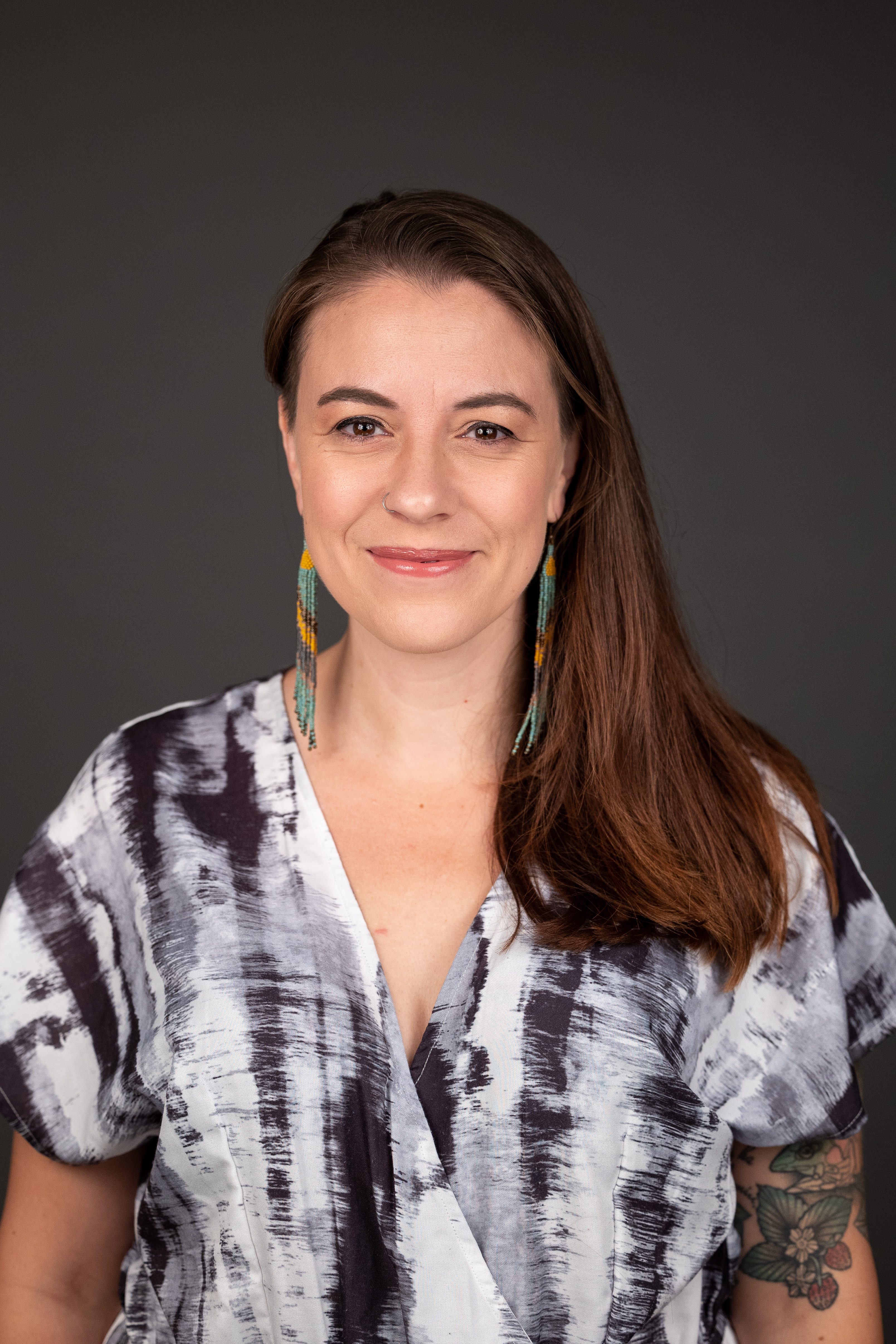
Danielle Gartner, PhD.
Dr. Gartner (Sault Ste. Marie Tribe of Chippewa Indians) is a population health scientist whose work recognizes and supports Indigenous self-determination, sovereignty, and resurgence. Her research is interdisciplinary and informed by frameworks and methods used in epidemiology, health services, sociology, geography, and Indigenous studies. She is currently an Assistant Professor in the Department of Epidemiology and Biostatistics at Michigan State University.

Laurel Harduar Morano, PhD, MPH
Dr. Harduar Morano is an epidemiologist who studies work-related injuries, illnesses, and fatalities. She worked at the CDC as a research assistant from 2001 to 2002 and then again from 2017 to 2023 as an EIS officer at NIOSH and then as a CEFO with DSLR. She is currently an Associate Professor in the Department of Medicine at Michigan State University.